


As AIs routinely solve some of the hardest open math problems, rogue swarms of agents hack billion-dollar companies, and frontier models leap forward in robot control, there’s plenty of reason to think the next few years will be the most consequential in human history. And it looks like parts of the rest of the world are finally catching on!
Though, for people looking to go all-in on making transformative AI go well, there’s a lot to catch up on: what trends in AI progress are worth keeping track of? What are the most relevant threat models? What positive visions of the future are worth fighting for, and how are people in the AI safety field pursuing them? In our conversations with people interested in AI safety, these questions about AI safety “context” kept coming up.
By context, we mean the knowledge and judgment that help someone understand the field and decide how to contribute. At BlueDot we’ve been thinking about what we can do to best unblock people on these questions and get them contributing faster and more effectively.
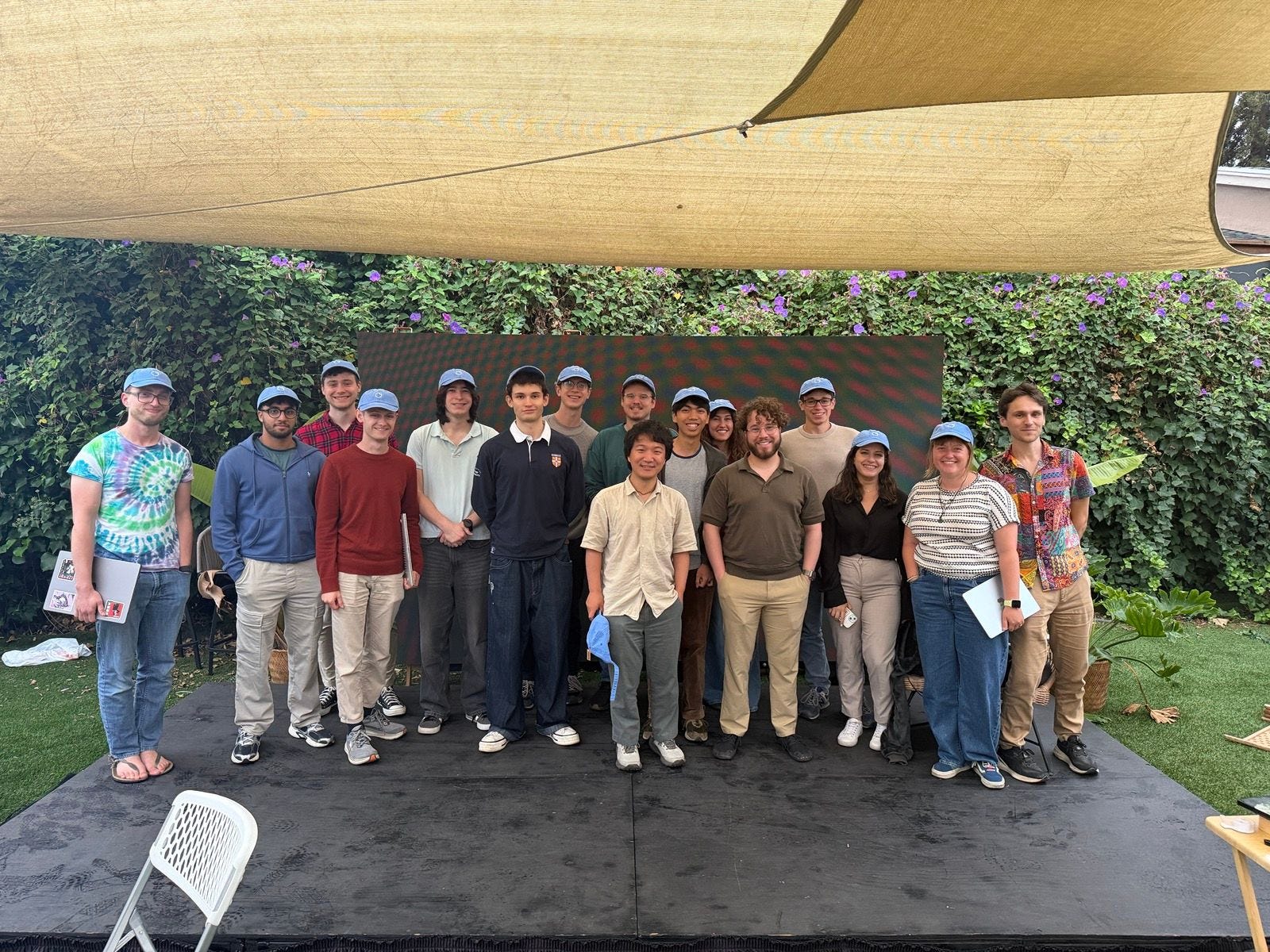
So when we got word that Lighthaven, a lovely rationalist hotel x campus in Berkeley, was available for last-minute events, we put together Context Week. Over the span of 1.5 weeks we scoped an initial theory of change, spun up a website, opened applications, did some promo and interviewed many exciting people who were new to AI safety. Ultimately, we accepted 24 participants, hired 6 facilitators, and from Aug 31 to Sept 3 ran this 4-day experimental program.
We set out to help participants develop clearer views on AI safety and where they could contribute, while learning what context really consists of and how to help people build it. Some participants reported resolving uncertainties and making decisions; others left with clearer questions and more specific next steps. We came away with a sharper understanding of what we were trying to teach and how to teach it better.
Inside Context Week
We designed the four days to help participants:
Clarify their values and the futures they want to work toward;
Examine how different AI safety strategies could reduce risk;
Develop their arguments through direct feedback from facilitators and peers;
Learn about the field from informal conversations with people embedded in it;
Apply what they learned to future roles or projects, and identify the areas they need to clarify before committing.
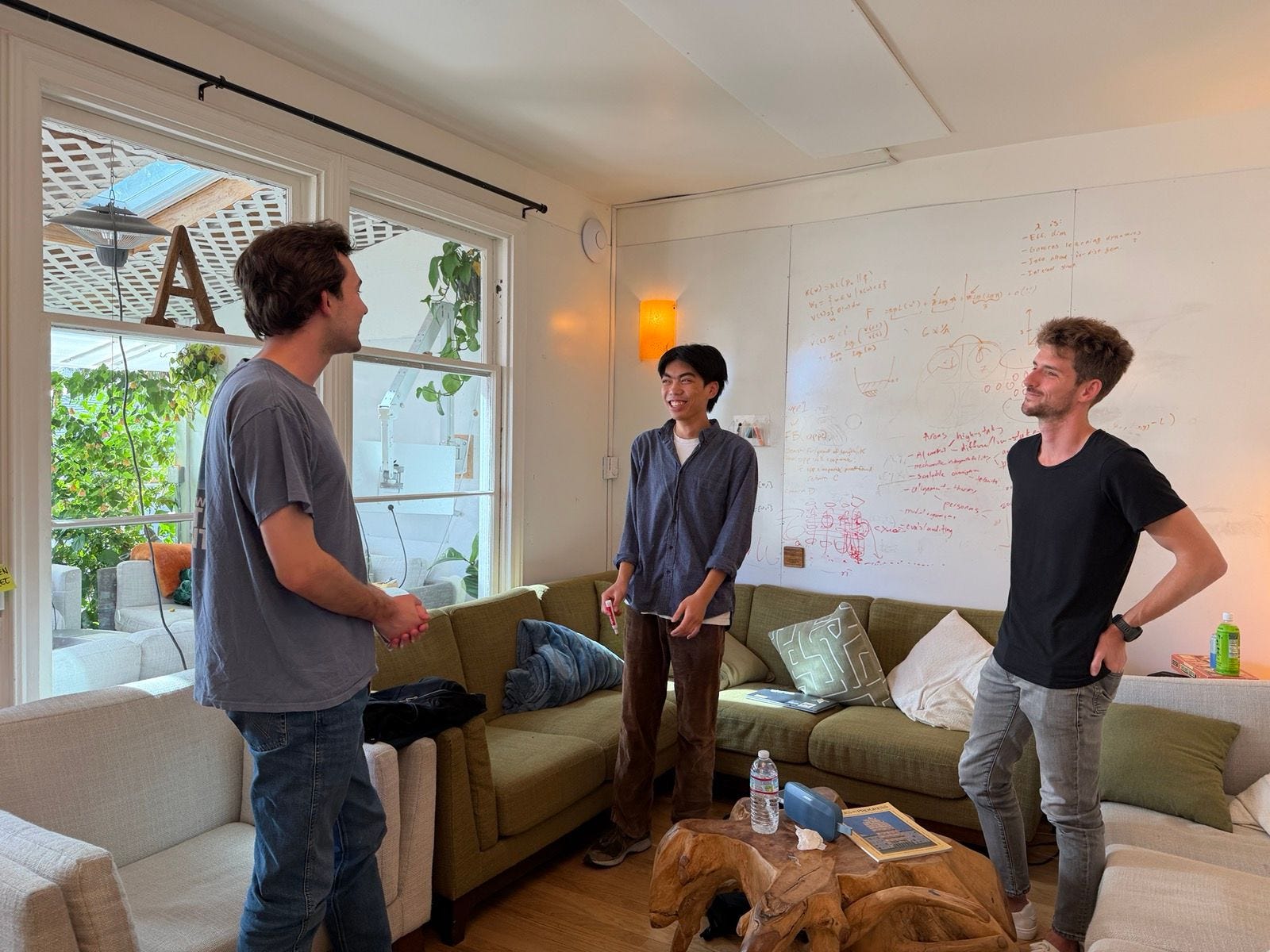
The structure was something between a college seminar and a summer camp: readings, debates, and small-group work, with time to sit with new ideas and talk them through in impromptu conversations.
An early session tasked participants with examining the OpenAI–Hugging Face incident through primary reports, looking at what happened, what failed, what was predicted, and how people responded. Participants then debated what the incident suggested about how more capable systems might behave, and the implications for technical research and governance.
Other sessions were more conceptual, like an exercise where participants sketched a post-AGI future they endorsed on index cards, then placed one another’s cards on a chart according to how desirable and stable they thought those futures would be.
We also shared practical knowledge about AI safety organizations: what they’re working on, their reasoning, and their norms and cultures. Our main focus, however, was equipping participants to identify which questions their views and plans depended on.
What we learned
Context bundles together several kinds of knowledge and ability. While it’s easy to point at what a high-context person can do — for example, set up a rogue-agent hotline in May 2026, ten weeks before internal OpenAI agents broke onto the open internet — distilling context into specific learning goals is harder.
We started with a broad intuition: people with a good understanding of AI safety can identify useful work, make good predictions, and adapt their plans as new evidence comes in.
Over the course of the week we disentangled this high-level idea into more specific things we could help people learn.
These include:
Situational awareness of AI progress;
Familiarity with different strategic agendas;
The ability to evaluate and develop strategies independently;
Knowledge of the organizations in the field and where one’s skills might fit;
An understanding of the norms of AI safety and adjacent communities.
Some of these can be developed through focused study and practice; others take weeks of turning ideas over in a dense intellectual environment. We now want to work out which of these matter most for particular roles, and what the field most needs, so we can be more targeted about building them.
Participants also needed different things - some wanted more foundational explanations, while others wanted deeper discussion of questions they were already thinking about. We didn’t always get that balance right. In future experiments, we want to be clearer from the start about who we’re trying to help, what’s holding them back, and what we want to help them do.
The residential format created a lot of value beyond the planned sessions. Living and working together gave people opportunities to continue discussions, ask questions as they arose, and learn from chance encounters.
Equally important was the sense of being part of a community that took the future seriously and wanted to do something about it. As the week went on, participants got more comfortable asking questions and admitting uncertainty, and made plans to keep in touch through reading groups and group chats. Much of this was hard to plan in advance and harder to recreate online, and it made us more excited about residential programs.
Directly questioning people’s assumptions was especially valuable. Asking participants to explain why they believed something, the causal mechanism by which an intervention would help, or what would change their mind helped reveal gaps that would otherwise go unnoticed. We plan to prioritize this sort of questioning much more in future programs.
What’s next?
Over the next two weeks, we’ll check in with participants to see which plans they’ve acted on, how their work is developing, and where further support would help. Where appropriate, we’ll explore support through our Career Transition Grants program.
Building on these and other lessons, BlueDot is developing a new program to help people deepen their understanding of AI safety and make better decisions about how to contribute. Our newly established Context Program team will share more details soon, and we’re excited to see their work develop!
Meanwhile, the Special Projects team is looking for its next high-leverage opportunities to have an impact. If you have an idea for something we should try, please pitch us!
Thank you to the people who made context week possible and so special:
Operations monster: Jack Douglass
Our facilitators: Sophie Kim, Merav Kaplan, Jack Wittmayer, Brandon Sayler, Julian Huang, Ayush Panda
Our guests: Jason Hausenloy, Arunim Agarwal, Alec Harris, Helena Tran

This post gave great context about how to give people context. Thanks for the context!
Something that this MATS resource expanded on and that Matt B. developed beautifully is the timeline breakdown across 3-6 months: https://docs.google.com/document/d/1tYj50GtJ7JS78w2WugoLaUF-b7XyE_VmY7XDRZs-l_s/edit?usp=drivesdk It helps those interested transform their plans into granular actions across those weeks that has been really helpful in context building. Thank you for your writing!