

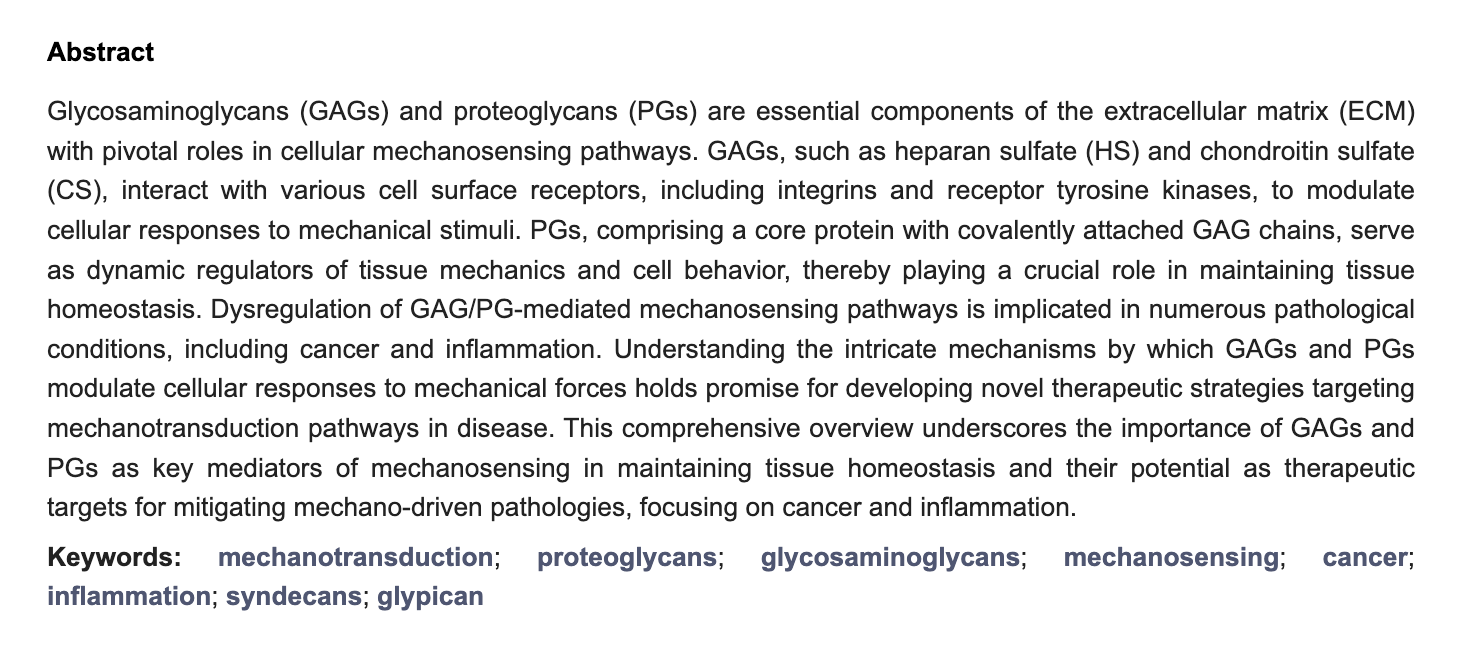
Biology papers can sometimes feel impenetrable:
But luckily there are a few common prefixes and suffixes that crop up again and again. Once you’ve learned this lingo, you’ll have a far easier time fighting through biology papers and wikipedia articles.
Cell structure and location
Cyto- → cell (cytoplasm, cytoskeleton, cytokine)
-some → discrete body/structure (ribosome, lysosome, chromosome, endosome)
Endo- → within/inside (endocytosis, endoplasmic reticulum, endotoxin)
Exo- → outside/outward (exocytosis, exotoxin, exonuclease)
Peri- → around (periplasm, perinuclear)
Trans- → across (transmembrane, transcription, translation)
Intra- → within (intracellular, intranuclear)
Extra- → outside (extracellular, extrachromosomal)
Enzymes and processes
-ase → enzyme (protease, kinase, polymerase, lipase)
-sis → process/action (mitosis, apoptosis, lysis, synthesis)
-lysis → breaking down/splitting (hydrolysis, glycolysis, proteolysis)
-genesis → creation/origin (biogenesis, pathogenesis, oncogenesis)
Kinase → adds phosphate groups (protein kinase, tyrosine kinase)
Phosphatase → removes phosphate groups
-merase → polymerising enzyme (polymerase, telomerase)
Enzyme names usually end in -ase with the substrate as prefix (lactase acts on lactose, protease on proteins)
Eating, destroying, killing
Phago-/-phage → eat/engulf (phagocyte, macrophage, phagocytosis)
Bacteriophage/phage → virus that infects bacteria (you’ll see “phage” used standalone constantly in molecular biology)
-cidal/-cide → killing (bactericidal, virucidal, fungicidal)
-static → inhibiting growth without killing (bacteriostatic)
-lytic → causing lysis/destruction (cytolytic, haemolytic)
Molecules and macromolecules
Glyco-/-glycan → sugar/carbohydrate (glycoprotein, glycolysis, proteoglycan)
Lipo-/Lip- → fat/lipid (lipoprotein, lipase, lipid bilayer)
Proteo-/Prot- → protein (proteome, protease, proteolysis)
Nucleo- → nucleus or nucleic acid (nucleotide, nucleosome, endonuclease)
Poly- → many (polymer, polypeptide, polysaccharide)
Oligo- → few (oligonucleotide, oligosaccharide)
Mono- → one (monomer, monosaccharide)
-ome1 → complete set (genome = complete set of genes, proteome = complete set of proteins)
Useful general prefixes
Bio- → life/living (biosynthesis, biomarker)
Hetero- → different (heterozygous, heterogeneous)
Homo- → same (homozygous, homologous)
Iso- → equal/same (isomer, isotonic)
Hyper- → excess/above (hyperactivation, hypertonic)
Hypo- → deficient/below (hypotonic, hypoxia)
Anti- → against (antibody, antigen, antibiotic)
Pro- → before/precursor (promoter, prophage, proinflammatory)
Test yourself!
Go through the abstract from the start of this post word-by-word and try to rewrite it in simple language with the help of the terminology above. You might not get everything, but I bet you’ll get further than you expect.
Use an LLM to check your work and help you with any parts you’re still confused about.
Note this is different from “-some” in the cell structure section